
LEO 2025 Sustainability: Building Sustainable Flow Toward a Smarter Low-Carbon Future
2026.05.27
Sustainability is rapidly becoming a defining factor in the future of global industry. As governments, infrastructure developers, and businesses work toward decarbonization goals, manufacturers are increasingly expected to deliver solutions that improve energy efficiency, reduce environmental impact, and support long-term resilience.
The LEO Group 2025 Sustainability Report reflects how sustainability continues to be integrated across the company's operations, technologies, and long-term strategy. This article highlights measurable progress in environmental performance, product innovation, responsible governance, and stakeholder value creation from LEO Pump.
At LEO, sustainability is not treated as a standalone initiative. It is embedded in how the company innovates, manufactures, and delivers value through smart fluid solutions.
The company's sustainability strategy focuses on three interconnected priorities:
- Advancing low-carbon manufacturing
- Developing energy-efficient technologies
- Creating long-term value for customers, employees, communities, and stakeholders
This approach aligns business growth with broader environmental and social objectives, ensuring that sustainability remains a core component of future development.
Reducing environmental impact begins with transforming how products are manufactured and how resources are utilized.
LEO's Wenling manufacturing base has deployed more than 100,000 square meters of photovoltaic systems supported by energy storage infrastructure. Renewable electricity is increasingly prioritized within daily operations, helping accelerate the transition toward a cleaner energy mix.
In 2025, renewable electricity consumption reached 12,683 MWh.
Advanced energy management systems provide real-time monitoring and optimization of energy use across manufacturing facilities. Data-driven controls improve operational visibility while supporting more efficient energy consumption.
LEO continues to improve manufacturing logistics through the implementation of automated guided vehicles (AGVs) and electric vehicle-based transportation systems. These initiatives help reduce operational emissions while enhancing productivity and operational efficiency.
Together, these efforts demonstrate how industrial manufacturers can reduce their environmental footprint while maintaining competitiveness and operational performance.
Innovation remains one of the most powerful drivers of sustainability within the water infrastructure sector.
LEO continues to invest in technologies that improve pump efficiency, reduce energy consumption, and extend equipment life cycles.
Key innovations include:
- Permanent magnet motor technology
- High-efficiency hydraulic designs
- Intelligent control systems
Compared with traditional asynchronous motor systems, these technologies can improve efficiency by approximately 5% to 15%, helping customers reduce operating costs while lowering indirect carbon emissions.
Intelligent regulation and on-demand energy supply capabilities enable pump systems to operate more efficiently under varying load conditions.
For example, a single 11 kW permanent magnet intelligent end-suction pump can achieve:
- Approximately 4,500 kWh annual electricity savings
- Approximately 3.5 tons of annual CO₂ emission reductions
Global water infrastructure faces mounting challenges, including population growth, urbanization, aging assets, water scarcity, and increasing energy demand.
At the same time, infrastructure owners are under growing pressure to improve efficiency while reducing environmental impact.
In this context, sustainability is no longer limited to environmental compliance. It has become a fundamental requirement for infrastructure resilience and long-term performance.
Energy-efficient pumps and intelligent fluid systems play a critical role by helping operators:
- Reduce electricity consumption
- Lower carbon emissions
- Improve operational reliability
- Extend equipment life cycles
- Optimize water resource utilization
Highlights of LEO Pump from the 2025 Sustainability Report include:
- More than 100,000 m² of photovoltaic installations deployed at manufacturing facilities
- 12,683 MWh of renewable electricity utilized in operations
- Expanded implementation of intelligent energy management systems
- Continued adoption of AGV and EV-based logistics solutions
- Pump efficiency improvements of 5–15% through advanced motor, hydraulic, and control technologies
- Through intelligent regulation and on-demand energy supply, LEO reduces unnecessary power output and supports lower lifecycle energy consumption and indirect carbon emissions.
- Expanded deployment of energy-efficient solutions across data centers, industrial facilities, HVAC systems, and municipal water infrastructure
These achievements demonstrate measurable progress toward lower-carbon operations and higher-efficiency infrastructure solutions.
As sustainability expectations continue to evolve, LEO remains focused on integrating environmental responsibility with technological innovation and operational excellence.
Future priorities include:
- Expanding renewable energy utilization
- Further improving manufacturing efficiency
- Advancing intelligent and energy-saving pump technologies
- Supporting customers' decarbonization goals
- Strengthening ESG governance and transparency
By continuously improving both products and operations, LEO aims to contribute to a more resource-efficient and low-carbon future.
The LEO Group 2025 Sustainability Report demonstrates that sustainability is becoming increasingly integrated into the company's strategy, operations, and innovation efforts.
From renewable energy adoption and green manufacturing to intelligent pump technologies and responsible governance, LEO continues to pursue measurable progress that benefits customers, communities, and the environment.
As global demand for efficient water and energy infrastructure continues to grow, LEO remains committed to creating sustainable value through innovation, responsibility, and collaboration.
Hot Media

Strategic Dialogue o...
2026.03.30

LEO Brand Center Lau...
2026.03.23
LEO at Big 5 Global ...
2025.11.27
A Landmark LEO–Al Mo...
2025.12.02
LEO at the 138th Can...
2025.10.22
LEO Pro-Bono Water S...
2025.08.15
LEO PUMP 2024 Annual...
2025.05.14
A New Journey, A New...
2025.03.18
30 Years of LEO: lea...
2025.01.06

LEO at 30: United Th...
2024.12.16
A New Journey, A New...
2024.11.21

Showcasing Innovatio...
2024.10.25

LEO “Growing Forward...
2024.07.19
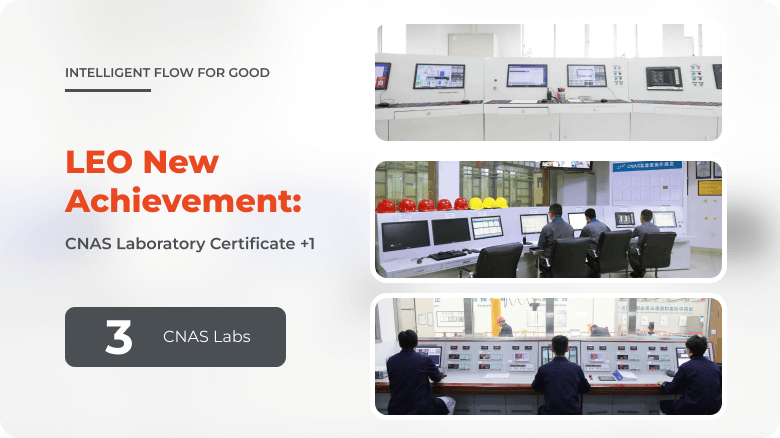
LEO Expands Global Q...
2024.09.06
LEO in Action: Power...
2024.08.02

LEO Event Highlight ...
2024.06.07

LEO PUMP at IFAT Mun...
2024.04.28
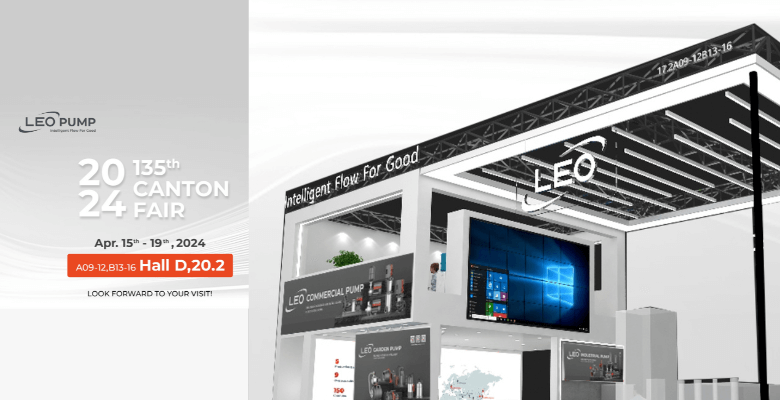
LEO PUMP at 135th Ca...
2024.04.01
LEO PUMP at MCE 2024...
2024.03.06
LEO PUMP at Big 5 Co...
2024.02.20
LEO PUMP at THE BIG ...
2023.11.16
LEO's Key Role in Wi...
2023.11.04
LEO at 134th Canton ...
2023.10.18
LEO PUMP at SNEC PV ...
2023.06.02

LEO Solution of Wate...
2022.09.28
LEO Project - Solar ...
2022.08.31

LEO Flagship Showroo...
2022.06.28
LEO Project on Power...
2022.06.22
Follow Us


LEO Headquarter:No.5 Building, Jingchen Fengqi Business Center, East Tanhua'an Road, Shangcheng District, Hangzhou, Zhejiang, 310000, P.R. China
Production Base:No.1, 3rd Street, East Industry Center, Wenling, Zhejiang, 317511, P.R.China
+86-576-8998 6360
www.leopump.com