
Strategic Dialogue on Water Infrastructure Development Between LEO and Uzbekistan Government
2026.03.30
As water scarcity and agricultural modernization increasingly shape development agendas across Central Asia, infrastructure investment in water management systems has become a strategic priority for governments in the region. Against this backdrop, LEO Group (LEO) recently held a high-level dialogue with the Ministry of Investment, Industry and Trade of Uzbekistan, focused on water infrastructure development and pump manufacturing.
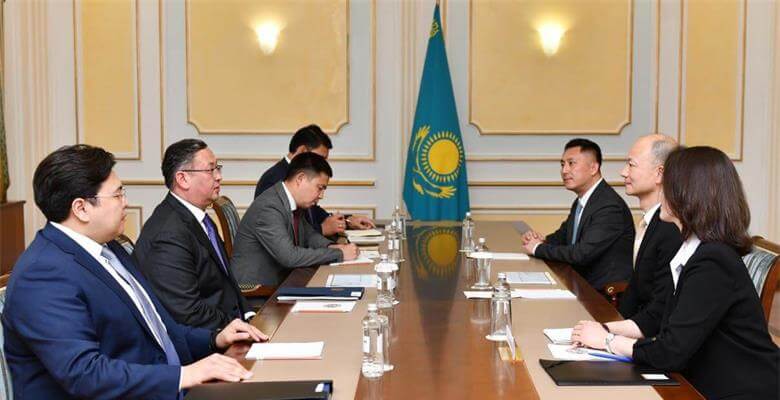
The meeting, held on March 19, 2026, brought together Ilzat Kasimov, Deputy Minister of Investment, Industry and Trade of Uzbekistan, and Xiangrong Wang, Chairman of LEO Group. Discussions centered on advancing water infrastructure modernization in Uzbekistan for improving water resource management, accelerating agricultural irrigation, etc.
For Uzbekistan, where agriculture remains a critical pillar of the national economy, improving water resource management and irrigation systems is essential for long-term sustainable growth. For LEO, the dialogue reflects its growing role as a global partner supporting modern water infrastructure projects.
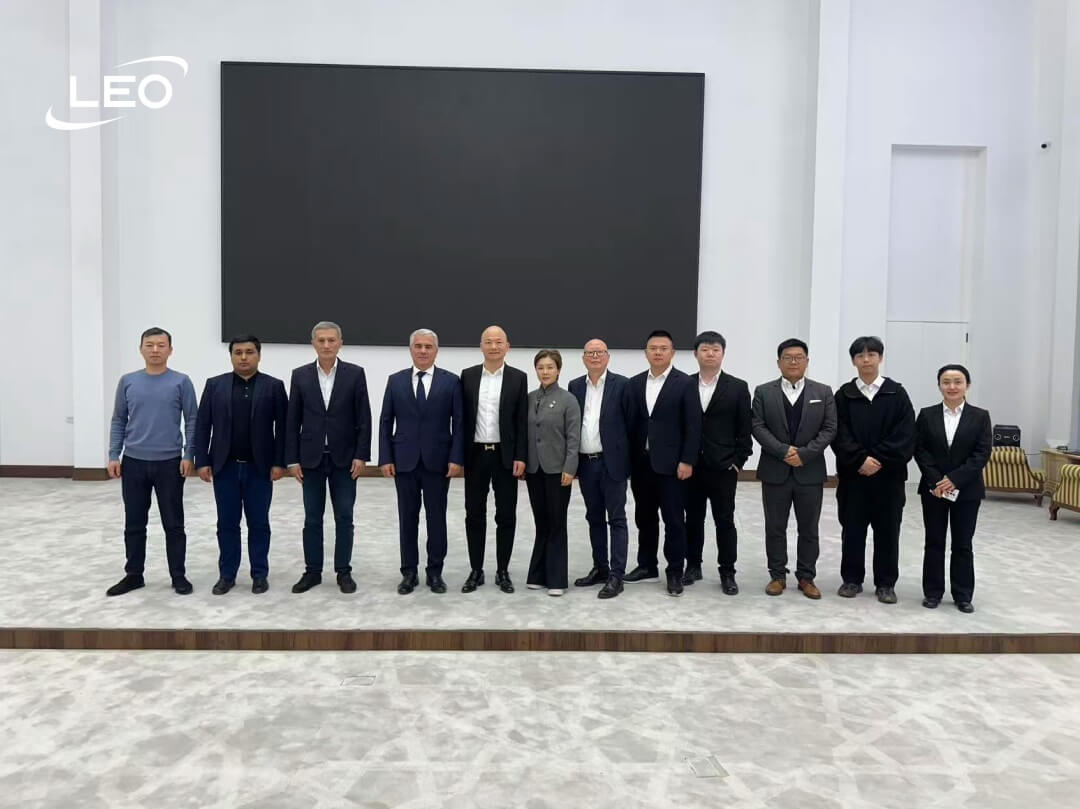
Water infrastructure modernization was a central focus of the meeting, reflecting Uzbekistan's ongoing efforts to improve water resource management and ensure reliable irrigation for its agricultural sector.
Government representatives highlighted the importance of modernizing irrigation systems to address water efficiency challenges and support long-term agricultural productivity. With much of Uzbekistan's farmland dependent on irrigation, upgrading pumping stations and water delivery networks is seen as a key step toward reducing water loss and improving distribution reliability.
During the discussions, both sides explored potential collaboration in the construction of modern pump stations and broader water infrastructure projects. In particular, the application of public–private partnership (PPP) models was identified as a promising framework for accelerating infrastructure investment while attracting international expertise and technology.
The dialogue also touched on opportunities to develop integrated solutions that combine advanced pumping technologies with modern water management systems—an approach increasingly adopted in large-scale irrigation and municipal water projects worldwide.
For countries such as Uzbekistan, where agriculture remains central to economic development, reliable pumping systems are essential to maintaining stable crop yields and improving water-use efficiency. High-performance pumps can enable more precise water distribution, reduce operational energy consumption, and support the modernization of irrigation networks.
With decades of experience in pump design and system integration, LEO Pump(the core business segment of LEO GROUP) has supplied fluid solutions to more than 160 countries and regions, serving industries ranging from agriculture and municipal water supply to energy and industrial applications.
In irrigation systems, modern pump technology can significantly enhance water management by enabling controlled flow regulation, automated operation, and efficient long-distance water transport. Such capabilities are particularly valuable as countries across Central Asia seek to modernize legacy irrigation infrastructure and adapt to evolving water resource challenges.
Beyond infrastructure projects, the meeting also examined the potential for deeper industrial collaboration, including opportunities for local manufacturing of pumping equipment.
One area of discussion involved the possible development of advanced engineering technology parks, which could support the production of pump equipment while fostering technical innovation and industrial cooperation. Establishing localized manufacturing capacity would not only strengthen supply chains but also contribute to skills development and industrial growth within Uzbekistan.
For Uzbekistan, attracting advanced manufacturing investment aligns with broader economic development goals, while for global companies like LEO Pump, regional production can enhance responsiveness to local infrastructure needs.
The dialogue between LEO Pump and Uzbekistan's investment authorities also reflects broader trends in international industrial cooperation across Asia.
Uzbekistan is currently advancing its national development program, known as "Uzbekistan-2030", which places strong emphasis on irrigation modernization and efficient water resource utilization. These priorities align closely with infrastructure development initiatives that encourage international investment and technology collaboration.
In recent years, Uzbekistan has introduced regulatory frameworks that support PPP participation in infrastructure development, creating new opportunities for foreign partners to contribute expertise and capital to national projects.
For LEO Pump, engagement with Uzbekistan forms part of a wider global expansion strategy focused on international partnerships in infrastructure and water technology. The company has pursued similar collaborations in multiple regions, including:
- strategic cooperation with the Saudi Ministry of Investment (2023)
- the development of a joint venture pump manufacturing project in Riyadh (2025)
- collaborated with the Thailand National Water Resources Office on technical exchanges related to water management and infrastructure development (2025)
Together, these initiatives highlight a growing network of international partnerships aimed at supporting water infrastructure modernization worldwide.
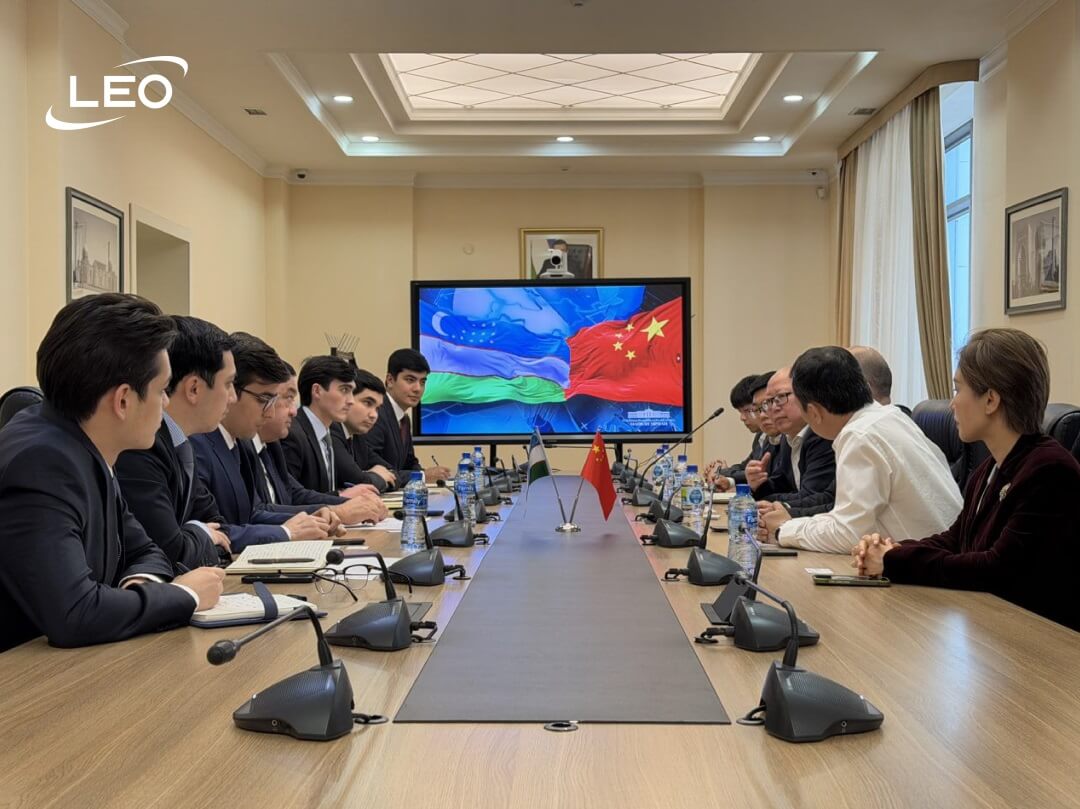
As Uzbekistan continues to modernize its water infrastructure, partnerships between government institutions and international technology providers are expected to play an increasingly important role.
Future cooperation opportunities discussed during the meeting include potential PPP-based pump station projects, infrastructure technology partnerships, and initiatives to strengthen local engineering capabilities. Such collaborations could help accelerate the deployment of advanced pumping solutions while supporting long-term improvements in water resource management.
For LEO Pump, these opportunities align with its broader vision of delivering smart fluid solutions that address global challenges in water supply, irrigation, and infrastructure resilience.
By combining advanced pump technologies with localized industrial cooperation and international project experience, partnerships like this have the potential to support sustainable infrastructure development across Central Asia and beyond.
The strategic dialogue between LEO and the Ministry of Investment, Industry and Trade of Uzbekistan reflects a shared commitment to improving water resource management, strengthening irrigation systems, and advancing industrial cooperation.
As global demand for efficient water infrastructure continues to grow, partnerships that combine engineering expertise, manufacturing capability, and policy support will be essential in building resilient water systems for the future.
Uzbekistan is prioritizing irrigation modernization under the Uzbekistan-2030 strategy to improve water efficiency, support agriculture, and strengthen long-term food security.
Pumps enable water transport, irrigation distribution, and pressure control, making them essential components of modern water supply and agricultural irrigation systems.
Public–private partnerships help governments attract investment, technology, and operational expertise from private companies to accelerate infrastructure development.
Global pump manufacturers provide advanced technologies, system integration expertise, and engineering support to improve water efficiency and reliability in irrigation networks.
LEO Pump provides pump and system solutions to more than 160 countries and partners with governments and infrastructure developers to support water management projects worldwide.
LEO Group (Stock Code: 002131)
LEO drives synergistic growth across two core business segments: Pump and Pumping System & Digital Marketing, while actively incubating and expanding into new industries.
From the flow of water to the flow of data, LEO has built a diversified and integrated industrial ecosystem through strategic synergy.
For core business segment of LEO GROUP: Pump and Pumping System
Empowering the entire lifecycle of smart Pump and Pumping System with AI, and establishing a global benchmark for the smart pump and pumping systems industry.
Hot Media

LEO Brand Center Lau...
2026.03.23

LEO at Big 5 Global ...
2025.11.27
A Landmark LEO–Al Mo...
2025.12.02
LEO at the 138th Can...
2025.10.22
LEO Pro-Bono Water S...
2025.08.15
LEO PUMP 2024 Annual...
2025.05.14
A New Journey, A New...
2025.03.18

30 Years of LEO: lea...
2025.01.06

LEO at 30: United Th...
2024.12.16
A New Journey, A New...
2024.11.21

Showcasing Innovatio...
2024.10.25
LEO “Growing Forward...
2024.07.19
LEO Expands Global Q...
2024.09.06
LEO in Action: Power...
2024.08.02
LEO Event Highlight ...
2024.06.07

LEO PUMP at IFAT Mun...
2024.04.28
LEO PUMP at 135th Ca...
2024.04.01
LEO PUMP at MCE 2024...
2024.03.06
LEO PUMP at Big 5 Co...
2024.02.20
LEO PUMP at THE BIG ...
2023.11.16

LEO's Key Role in Wi...
2023.11.04
LEO at 134th Canton ...
2023.10.18
LEO PUMP at SNEC PV ...
2023.06.02

LEO Solution of Wate...
2022.09.28

LEO Project - Solar ...
2022.08.31

LEO Flagship Showroo...
2022.06.28
LEO Project on Power...
2022.06.22
Follow Us


LEO Headquarter:No.5 Building, Jingchen Fengqi Business Center, East Tanhua'an Road, Shangcheng District, Hangzhou, Zhejiang, 310000, P.R. China
Production Base:No.1, 3rd Street, East Industry Center, Wenling, Zhejiang, 317511, P.R.China
+86-576-8998 6360
www.leopump.com